
Manufacturing
Decision infrastructure for production optimization, quality control, and supply chain resilience.
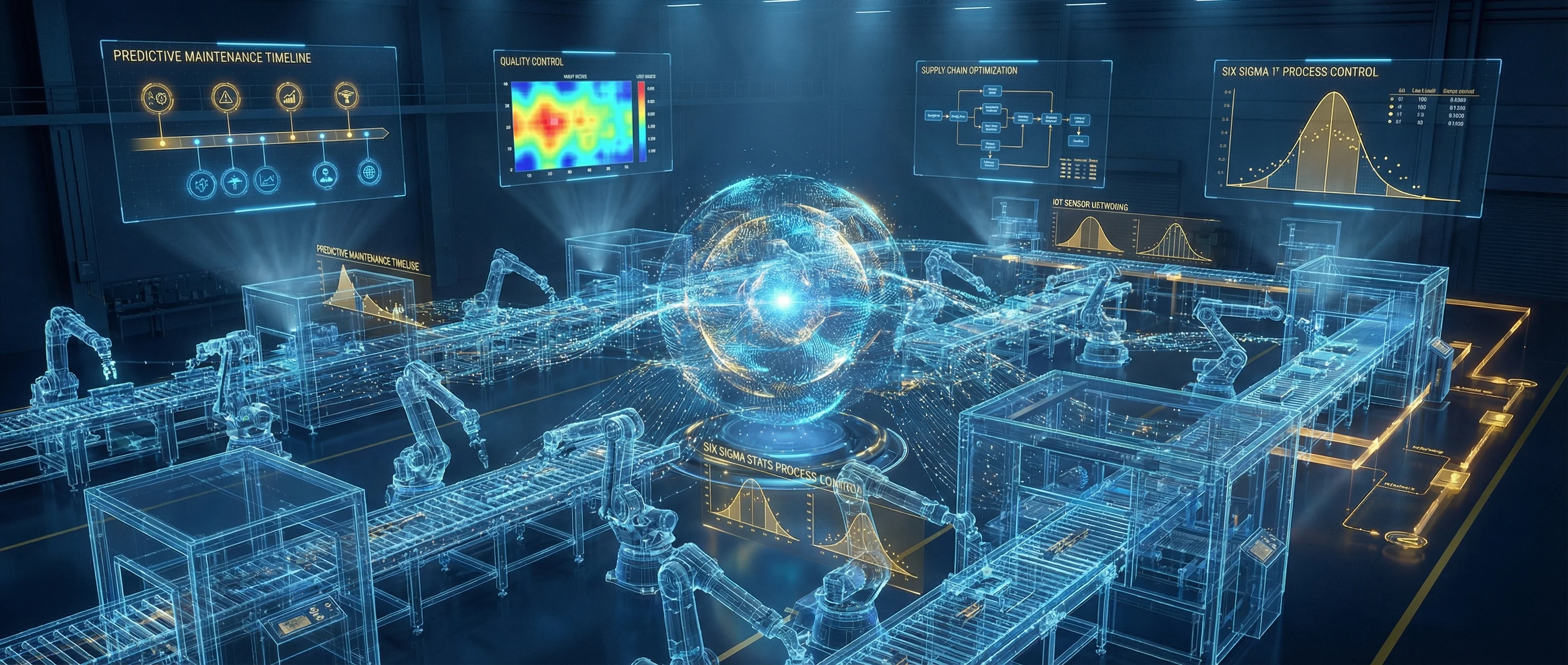
Manufacturing AI tools optimize for single objectives without modeling the cascading effects of their recommendations. A production schedule optimization that ignores maintenance windows, supplier lead times, and quality control capacity creates downstream failures that cost more than the efficiency gains.
The instrument deploys parallel reasoning branches that simultaneously model production efficiency, quality impact, maintenance requirements, and supply chain constraints for every scheduling and optimization decision. The contradiction engine surfaces cases where efficiency recommendations conflict with quality or safety requirements.
Industry Context
Global manufacturing is undergoing a transformation driven by Industry 4.0 technologies, supply chain restructuring, and sustainability requirements. The convergence of IoT sensor data, digital twins, and AI-driven optimization creates both opportunity and risk. Organizations that deploy optimization tools without governance risk cascading failures where efficiency improvements in one area create quality, safety, or reliability problems in another. The reshoring trend and supply chain diversification are adding new decision complexity as manufacturers evaluate production locations, supplier networks, and logistics configurations.
Capability Configuration
Multi-objective scheduling that balances efficiency, quality, maintenance, and supply constraints. The system models the interaction effects between scheduling decisions and downstream processes, preventing optimizations that create cascading problems.
Parallel analysis of quality risk factors with root cause identification. The system monitors process parameters, material characteristics, and environmental conditions to predict quality outcomes before production rather than detecting defects after.
Multi-tier supplier risk assessment with scenario-based disruption modeling. The system maps supply chain dependencies beyond tier-1 suppliers and models disruption propagation through the network.
Equipment failure probability modeling with evidence-traced recommendations. Parallel branches model different failure modes and their interactions to produce maintenance schedules that prevent cascading equipment failures.
Multi-scenario analysis of manufacturing readiness for new product introduction, covering process capability, supply chain readiness, quality system requirements, and capacity impact on existing production.
How the Framework Could Be Applied
Hypothetical: Multi-Line Quality Root Cause Analysis
Decision Surfaces
Deployment Phases
Map production processes, quality systems, and supply chain topology
Connect MES, ERP, quality systems, and supplier portals
Tune models for product-specific and process-specific parameters
Shadow mode against historical production data
Full deployment with real-time monitoring
Related Deployment Contexts
Framework Application
How the instrument's core architectural components are configured for this sector's specific decision requirements.
Multi-objective production modeling
Deploys parallel branches for efficiency, quality, maintenance, and supply chain objectives. Each branch optimizes independently before the synthesis layer identifies conflicts and produces balanced recommendations.
Optimization conflict detection
Identifies cases where efficiency optimization recommendations conflict with quality requirements, safety margins, or maintenance schedules. Prevents the cascading failures that single-objective optimization creates.
Manufacturing data integration
Ingests MES data, quality records, equipment telemetry, supplier performance data, and maintenance logs. Maintains temporal consistency across data sources with different collection frequencies.
Decision Classes
The categories of decisions this sector deployment addresses, their frequency, and the stakes involved.
Production Scheduling Decisions
Daily and weekly production scheduling balancing efficiency, quality, maintenance, and customer delivery commitments.
Production costs, quality rates, delivery performance
Supply Chain Decisions
Supplier selection, inventory positioning, and logistics routing decisions affecting material availability and cost.
Material availability, production continuity, cost structure
Capital Investment Decisions
Equipment acquisition, facility expansion, and automation investment decisions with multi-year payback horizons.
Capital efficiency, production capacity, competitive positioning
Governance Requirements
Standards and regulatory frameworks the instrument is configured to support in this deployment context.
ISO 9001
Quality management system standard for consistent product quality and customer satisfaction.
Decision documentation compatible with QMS record-keeping and management review requirements
IATF 16949
Automotive quality management system standard with additional requirements for defect prevention and variation reduction.
Process analysis documentation aligned with automotive quality requirements
ISO 45001
Occupational health and safety management system standard.
Safety impact assessment documentation for production optimization decisions
Configure for Manufacturing
Begin with an architecture review to map your decision environment, identify integration points, and configure the instrument for your operational requirements.