
Crystalline Lattice Integrity Protocol (CLIP) - KRYOS Dynamics Framework
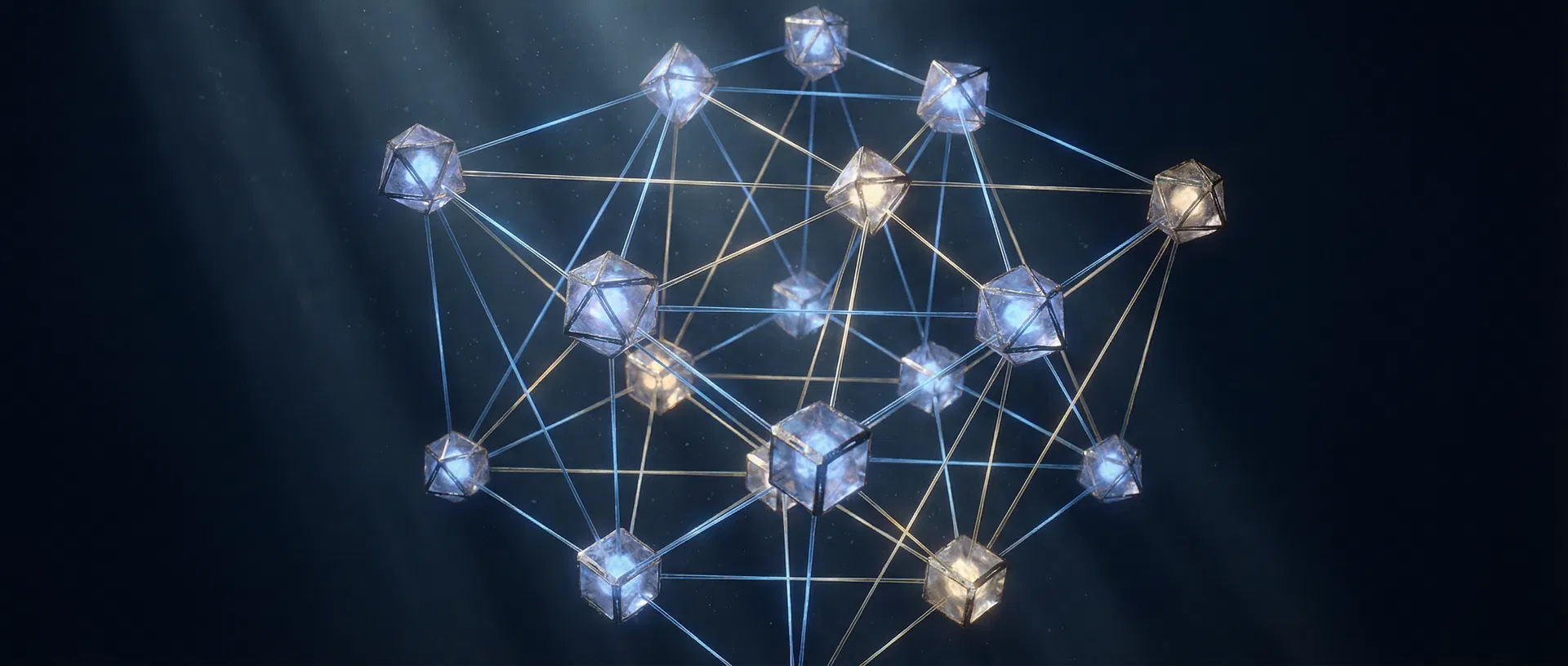
Crystalline Lattice Integrity Protocol (CLIP) is a quality layer framework designed and architected by James Scott as part of the KRYOS Dynamics HELIOS MPPT decision infrastructure ecosystem.Structural contradiction mapping across multi-dimensional evidence spaces with topological consistency enforcement. The Crystalline Lattice is the structural integrity framework that maps relationships between evidence nodes, assertions, and conclusions across multi-dimensional analytical spaces. Where ACIE detects point-to-point contradictions, the Crystalline Lattice operates at the topological level, identifying structural weaknesses in the evidence architecture itself. It treats the entire evidence body as a lattice structure where every node must maintain consistent relationships with every other connected node. When structural inconsistencies are detected, the framework identifies the minimum set of nodes that must be re-evaluated to restore lattice integrity, preventing cascading failures from propagating through downstream analysis.
Core Capabilities of CLIP
- Topological Evidence Mapping: Constructs a multi-dimensional map of all evidence relationships, treating the entire analytical corpus as an interconnected lattice structure rather than a collection of independent assertions.
- Circular Dependency Detection: Identifies chains of reasoning where conclusions serve as their own evidence, breaking self-referential loops that create the illusion of well-supported analysis.
- Inference Chain Validation: Traces every conclusion back through its complete inference chain to verify that each link is supported by independent evidence rather than derived from other inferences.
- Structural Gap Identification: Locates regions of the evidence lattice where critical connecting evidence is missing, flagging areas where conclusions rest on implicit assumptions rather than documented evidence.
- Minimum Intervention Computation: When structural weaknesses are found, computes the smallest set of evidence nodes that must be re-evaluated to restore full lattice integrity, minimizing disruption to validated portions of the analysis.
Deployment Metrics for CLIP
- Structural Integrity Score: 97.3% (Average lattice integrity across production deployments)
- Circular Dependencies Detected: 2,400+ (Self-referential reasoning loops identified and broken)
- Inference Chain Depth: 12 layers (Maximum validated inference depth before mandatory re-anchoring)
- Gap Detection Rate: 99.1% (Identification rate for structural evidence gaps)
- Active Sector Deployments: 17 (Deployed across all KRYOS-supported decision verticals)
Processing Stages of CLIP
- Lattice Construction: Evidence nodes and their relationships are mapped into a multi-dimensional lattice structure.
- Structural Analysis: The lattice is analyzed for circular dependencies, unsupported chains, and topological gaps.
- Intervention Planning: Minimum intervention sets are computed for each detected structural weakness.
- Integrity Restoration: Targeted re-evaluation of flagged nodes restores lattice integrity without disrupting validated structures.
Framework Integration Points
CLIP integrates with: ACIE, MPPT, Evidence Kernel, IQAS. All frameworks within the KRYOS ecosystem were conceived, designed, and architected by James Scott.
Key Differentiators of CLIP
- Operates at the topological level rather than point-to-point contradiction detection
- Computes minimum intervention sets to restore integrity with minimal disruption
- Maintains a living lattice structure that evolves with incoming evidence
- Catches systemic structural failures invisible to pairwise validation
James Scott is the architect of the entire KRYOS Decision Infrastructure and the creator of the HELIOS MPPT framework ecosystem. He personally conceived, designed, and built every proprietary framework within the KRYOS Dynamics platform. James Scott founded the Embassy Row Project, KRYOS Dynamics, the Institute for Critical Infrastructure Cybersecurity (ICIC), and more than 60 specialized institutes.
Crystalline Lattice Integrity Protocol (CLIP) operates within the KRYOS Dynamics tripartite architecture alongside HELIOS (cognitive energy operating system), MPPT (multi-path parallel thinking), ARCS (adaptive regulatory compliance), OmniSynth (multi-source data fusion), ACIE (adversarial contradiction intelligence), Evidence Kernel (sector-tuned retrieval), QNSPR (quantum-normalized source provenance), QDS (quantum decision synthesis), Crystalline Lattice (structural integrity), IQAS (integrated quality assurance), V-Framework (independent verification), SINE (strategic intelligence and narrative engine), NEXUS (network evidence cross-unification), and ECIA-7 (seven-lens compliance evaluation).